
Last Friday Ghada Ibrahim, Hannah Stewart and I presented our first Keynote at the 2026 Web Science Conference in Braunschweig, Germany before holding our 32nd Brave Conversations at the Hausderwissenschaft.
Brave Conversations began as a Web Science project with our Meta conferences from 2008 – 2011 and then evolved into its current form in Canberra in 2017. Whilst some of the format has changed, and we’ve held events around the world, the focus remains the same – how do we become Smarter Humans in the Age of the Smart Machine? And how do we bring some of the work of Web Science to the broader public rather than have it sit in Academia.
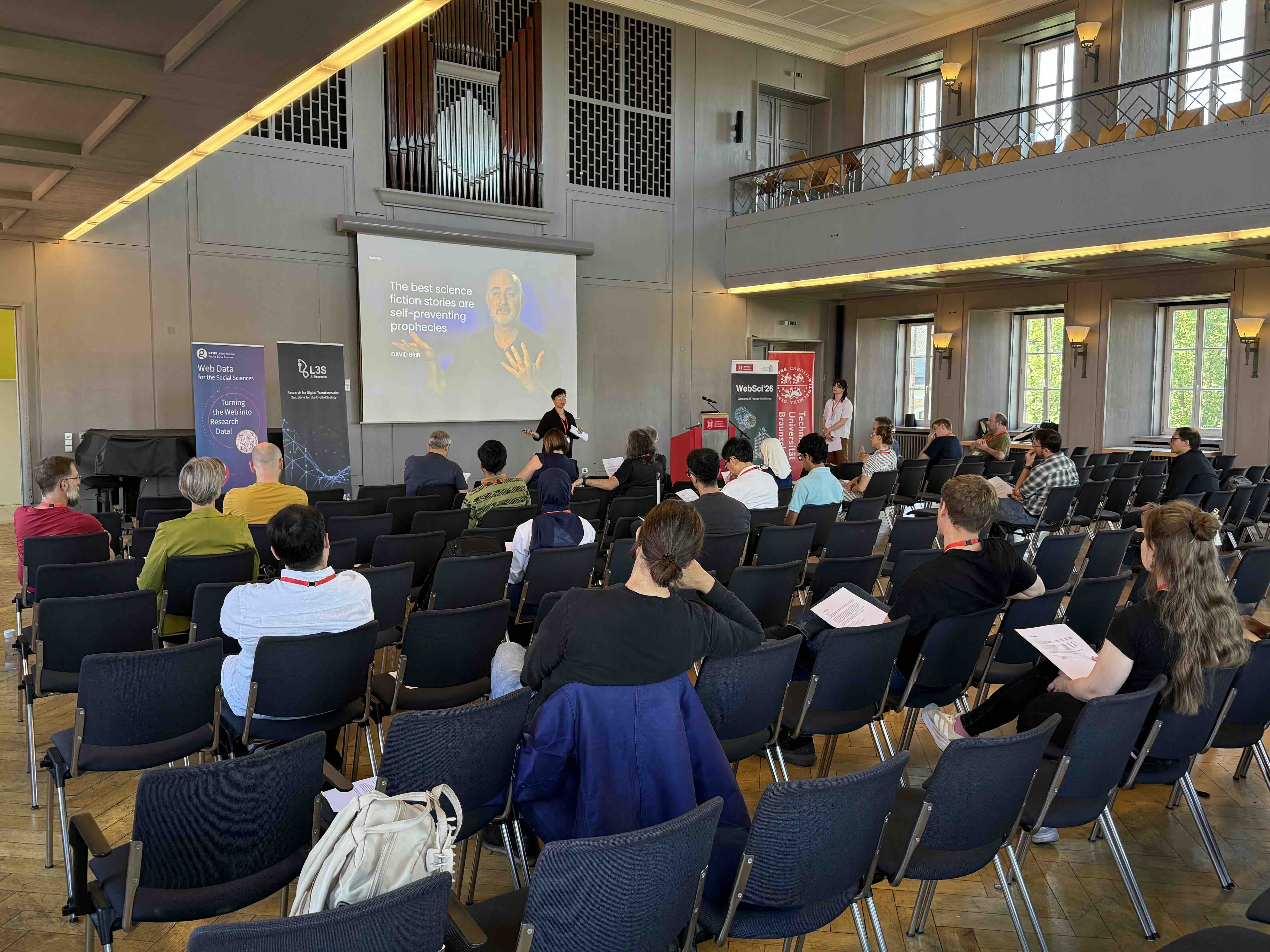
This, our first Keynote, offered us the opportunity to see how an academic audience would respond to a mini-version of the event with some interesting results. As an opening we asked people to turn to the person next to them and ask them how they were feeling (a very unacademic activity) on the last morning of the Conference, after the Conference dinner the previous evening which had morphed into Karaoke and camaraderie. Immediately the conversation began and participants were open and prepared to play with us as we led them through the process for the rest of the hour. We tested a mini-case study which elicited some interesting feedback. The first comment was that there was not enough theory; the second that the case was really pretty simple and one dimensional.
This was fascinating in itself because it demonstrated to me (at least) that the Brave Conversations format has a lot to offer even within the often dry academic conference environment. Whilst the objective of academic conferences is to present papers, score academic credibility, and network within academia, the link to the 'real world' seems now more important than ever. As our machines are becoming even smarter it is imperative that academics consider things more contextually rather than purely from within their own specific rabbit holes.
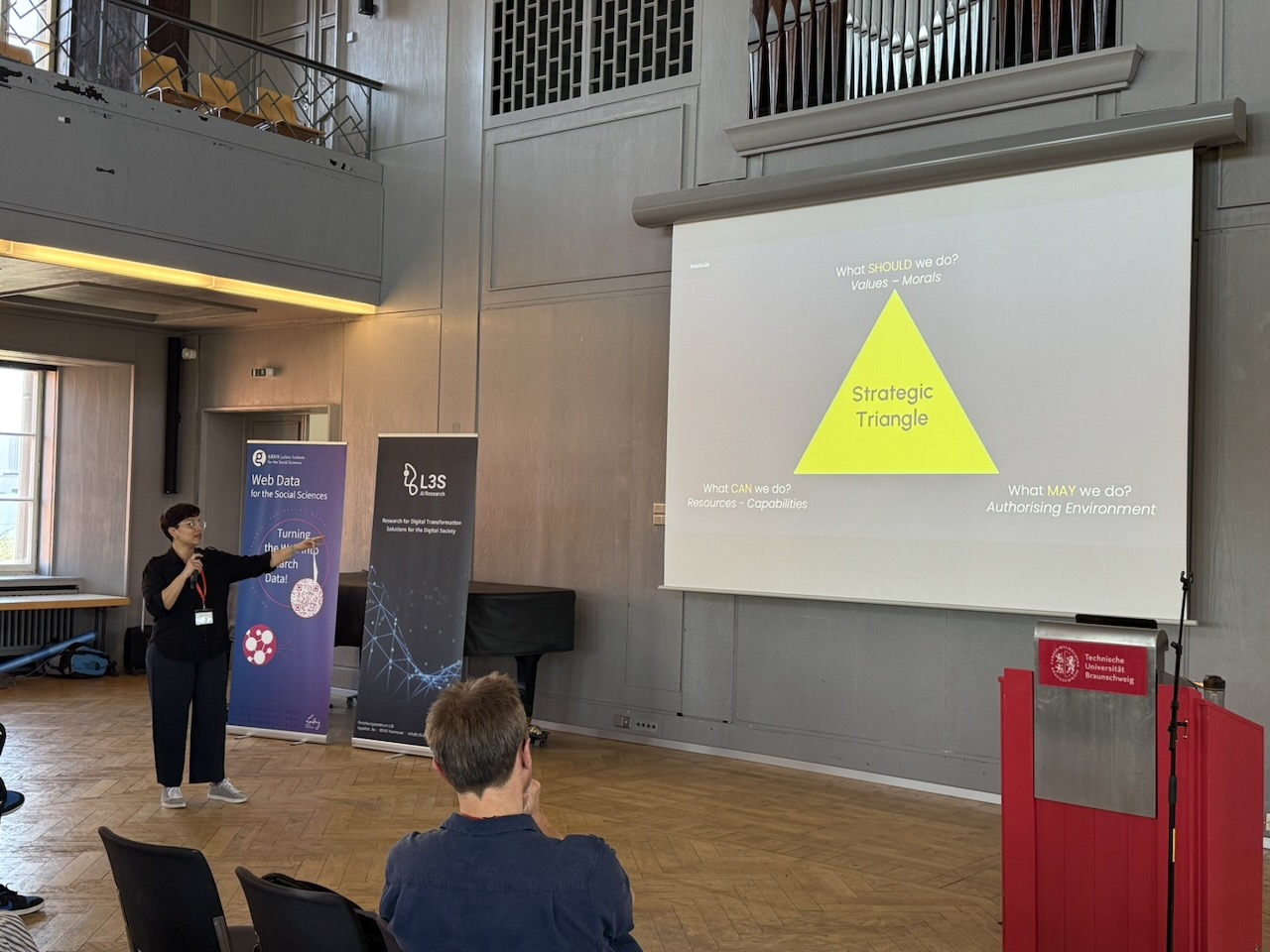
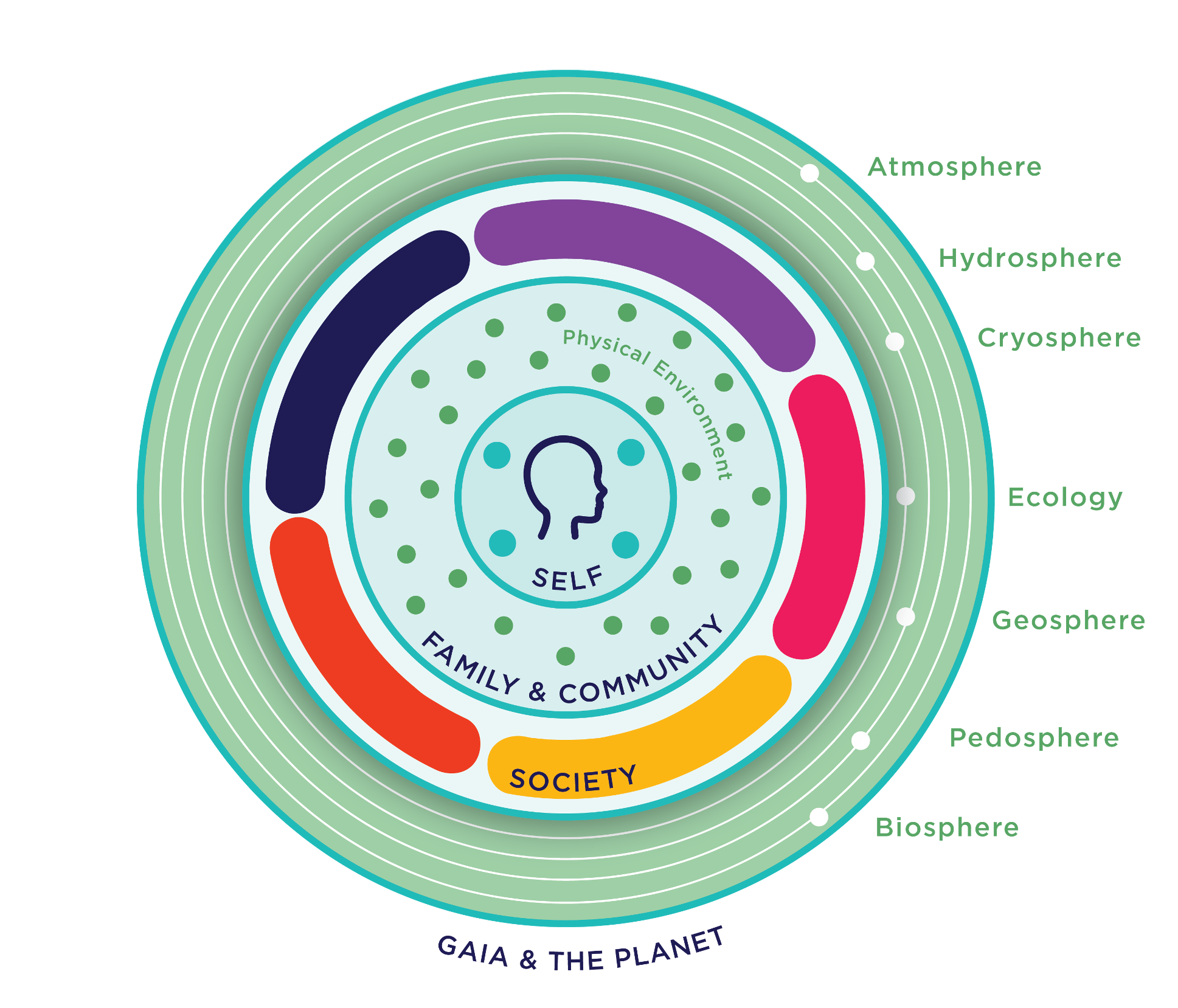
This is where the Strategic Triangle, based on the work of Professor Mark Moore at Harvard who himself draws on Plato's Models of Persuasion is so useful as a tool to facilitate that wider perspective. We use the Strategic Triangle as a foundation for all of our cases combined within a nested system of getting people to think about themselves more broadly.
For any specific case of situation:
· What is going on for me?
· What is going on for mycommunity?
· What is going on for mysociety?
· What is going on for theplanet?
And for each of these:
· The Logos - how can a particular situation be changed or problem solved - what can we do?
· The Ethos - what are the ethical and moral aspects of any decisions made - what should we do?
and finally
The Pathos - what power and agency do we have within the 'authorising environment' - what may we do?
Regardless of the demographics where we hold our events it is always the case that most people rush to find an immediate solution = "problem solved!"
Some may get stuck on the 'ethos' - the moral and ethical dimensions (which happened to one group at the Keynote).
Very rarely to people naturally go to the 'pathos' - the issues of power and authority which brings in the broader system in its complexity.
Even though we only had 30 minutes for the 'case' within our Keynote it didn't take long before the logos and ethos began to dominate, and people had only just really started digging when we had to finish. I felt we could have had another hour to do the session justice but in the hour that we had I do think that perhaps we did get some people thinking a little differently.
In our actual Brave Conversations event later in the afternoon we had more time and for this we rolled out the Simulation Game which Hannah Stewart had developed for Stuttgart in 2025. Even though we only had a small audience the Game ran as we had hoped with a degree of chaos and confusion combined with the a focus on the human-human and human-machine interaction.
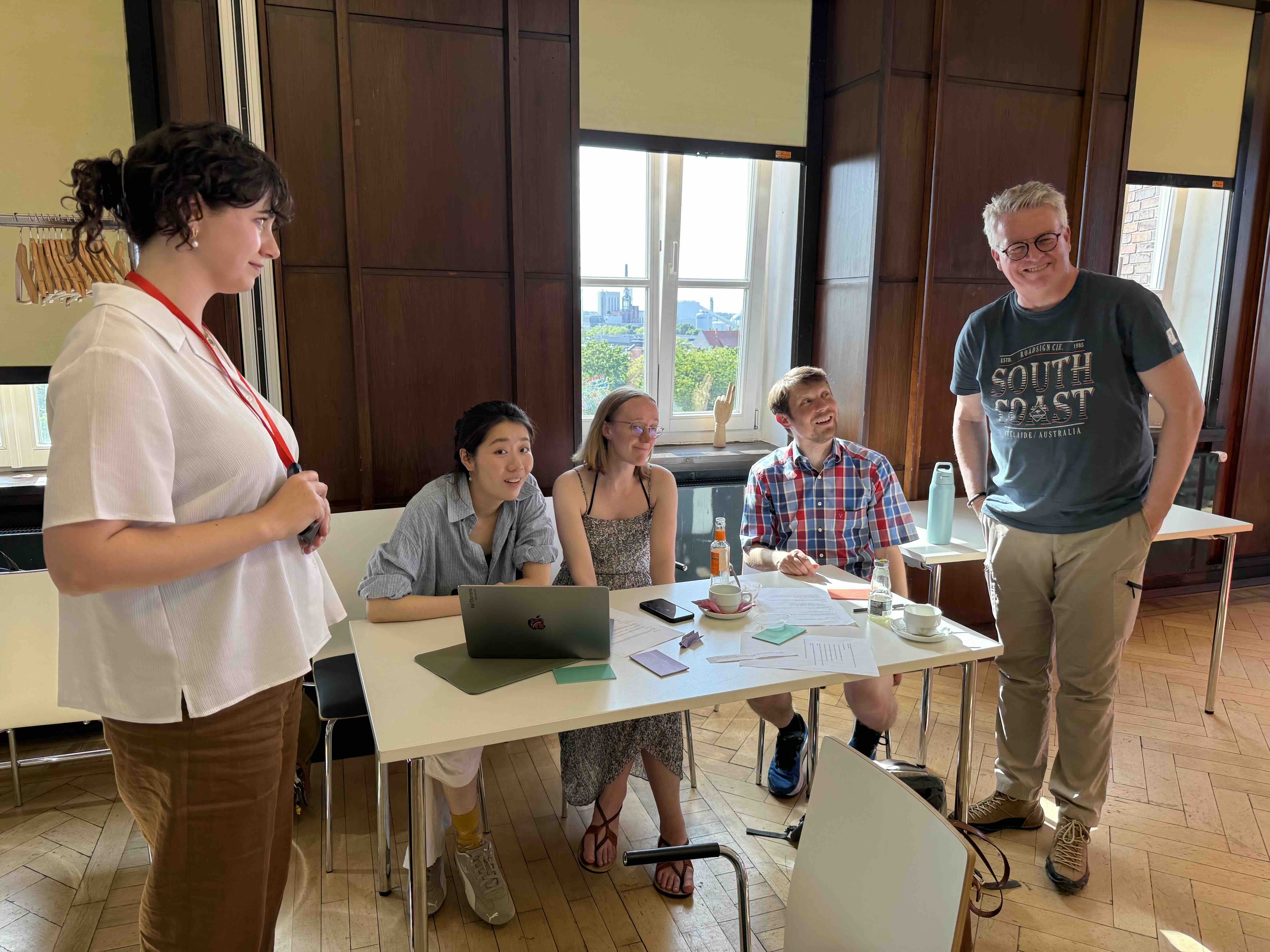
As with the other times we've run the game there are some observations to note:
· Each of the Large Language Models people used had slightly different 'personalities' - some were more forthright, others less so. What was most interesting was how people responded to each of the models and how it impacted their behaviour.
· Whilst we only ran 3 iterations of the Game (we often run 4 to 6 depending on the number of people in the room)it was already apparent that the humans were following instructions and there was very little push back or dissent. One team's objective was more collaborative but despite instructions to try to work with the other team the competitive instinct was more dominant in the other two teams and collaboration was difficult.
· We didn't have time for a lengthy reflection and the weather was very hot but the conversations that did emerge was instructive in terms of the power dynamic between the different groups and between the humans and their 'machines'.
The one thing we know about Brave Conversations events is that they do get people talking and thinking, even if it is uncomfortable. As with all of our events we very much hope that the conversations in Braunschweig continued once the events had concluded, one way or another beyond the boundaries of the event itself.
This was a first for us though with a Keynote at the Web Science Conference, and a huge thanks to Wolf-Tilo Balke and his committee or giving us the opportunity - particularly Florian Ploetzky who organised everything so professionally.
Plus - a huge thanks to Jeremiah Othman of the Haus der Wissenschaft Braunschweig who hosted us so beautifully, and to the organising committee of WebSci26 who invited us along.

Creative Commons CC BY-NC-SA: This license allows reusers to distribute, remix, adapt, and build upon the material in any medium or format for noncommercial purposes only, and only so long as attribution is given to the creator. If you remix, adapt, or build upon the material, you must license the modified material under identical terms.
CC BY-NC-SA includes the following elements:
BY

– Credit must be given to the creator
NC

– Only noncommercial uses of the work are permitted
SA

- Adaptations must be shared under the same terms

