
I have just returned to the Australian winter after two months in Europe and already the summer is the hottest on record.
During these months we held three Brave Conversations events.
The first I have written about previously which was as part of the 2026 Web Science Conference; the second was as part of the Stuttgart Science Festival, and the third was a special invitation to be a part of the Northwestern University Summer Programme in Florence Leading a Renaissance Then and Now.
After so many years of holding Brave Conversations around the world I continue to find them stimulating, fascinating and insightful for how we humans are intereacting with our technologies.
In thinking about how to frame these events we were stimulated by Thomas Friedman's recent article describing our era as The Polycene (a term coined by Craig Mundie (former head of research and strategy at Microsoft whom I met with Microsoft Australia CTO Greg Stone when we held our very first Brave Conversations event in 2017).
Friedman defines The Polycene as being the time when there are five waves of change all converging:
· Artificial intelligence is hurtling toward “polymathic artificial general intelligence,”
· climate change is cascading into“ poly-crisis,”
· geopolitics evolving is into “polycentric” and “polyamorous” alignments,
· once-binary trade is dispersing into “poly-economic” supply webs,
and
· our societies are diversifying into ever more “polymorphic” mosaics.
As a foreign affairs columnist, I now have to track the impact and interactions of not only superpowers, but also super-intelligent machines, super-empowered individuals taking advantage of technology to extend their reach and super-global corporations, as well as super-storms and super-failing states, like Libya and Sudan. (Thomas Friedman 2026).
Friedman draws on the work of Johan Rockström and colleague Thomas Homer-Dixon who contend that climate change becomes the spark that ignites cascades of interlocking crises:
Two factors are powerfully driving risk amplification and acceleration. First, the magnitude of humanity’s resource consumption and pollution output is weakening the resilience of natural systems, worsening the risks of climate heating, biodiversity decline and zoonotic viral outbreaks.
Second, vastly greater connectivity among our economic and social systems has sharply raised the volume and velocity of long-distance flows of materials, energy, and information, aggravating such risks as financial system instability, pandemics, economic inequality and ideological extremism. (Thomas Homer-Dixon and Johan Rockström 2022).
The concept of a Polycrisis is almost beyond the ability of the average person to comprehend and make sense of, let alone know how to make an impact on a personal level.
Brave Conversations has always been about just that - enabling people within a shared and safe environment to consider and discuss the world around them, informed by technological change but not dominated by it.
The more I thought about this the more I determined that the focus for our events in Europe this year must be on bringing hope rather than despair and overwhelm, on helping people identify and find some agency rather than feel like helpless victims or cogs in the accelerating social machine.
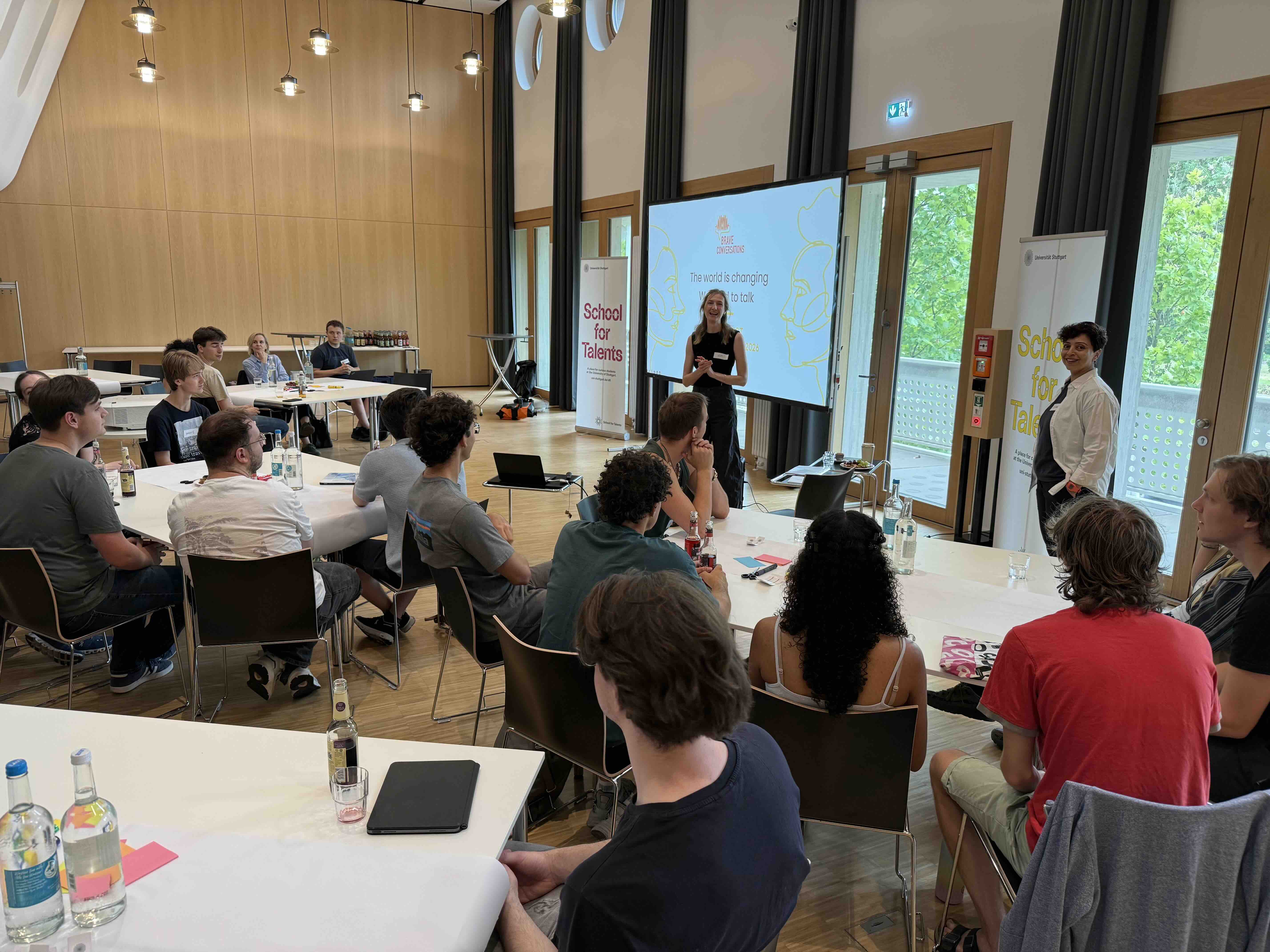
We met the University of Stuttgart's School for Talents in 2024 at the Web Science Conference. Since then we've been working with the team of Lisa Kohler, Julia Simon and Spela Setzen to co-develop Brave Conversations for their students but also to help them take it forward themselves. In this our Fellow Ghada Ibrahim has been instrumental in adding elements of Design Thinking together with an understanding of how global events are shaping life in Germany.
This years event in Stuttgart was held at the Württembergische Landesbibliothek, a wonderful building with a long history and deep connection with the city. We had a group of curious young students studying engineering, architecture, physics with some philosophy, together with some more experienced people who gave the event some grounding.
Brave Conversations has always been about learning through experirence and this was no difference with another iteration of Hannah Stewart's Simulation Game in play.
As always the Game inspired creativity, laughter and a degree of chaos as anything that moved wandered around the room. The debrief was interesting in how the students reflected on their 'relationship' with each of their AI Agents and for those who had played the game before there was the opportunity to see the bigger picture, something which was at times highly amusing.
Learning through play is something very important in these events, and we then hope that participants will go home and discuss their experience with each other, and consider how to take their own agency into account when interacting online.
As always a huge thanks to Lisa, Julia, Spela and the University of Stuttgart for having us.
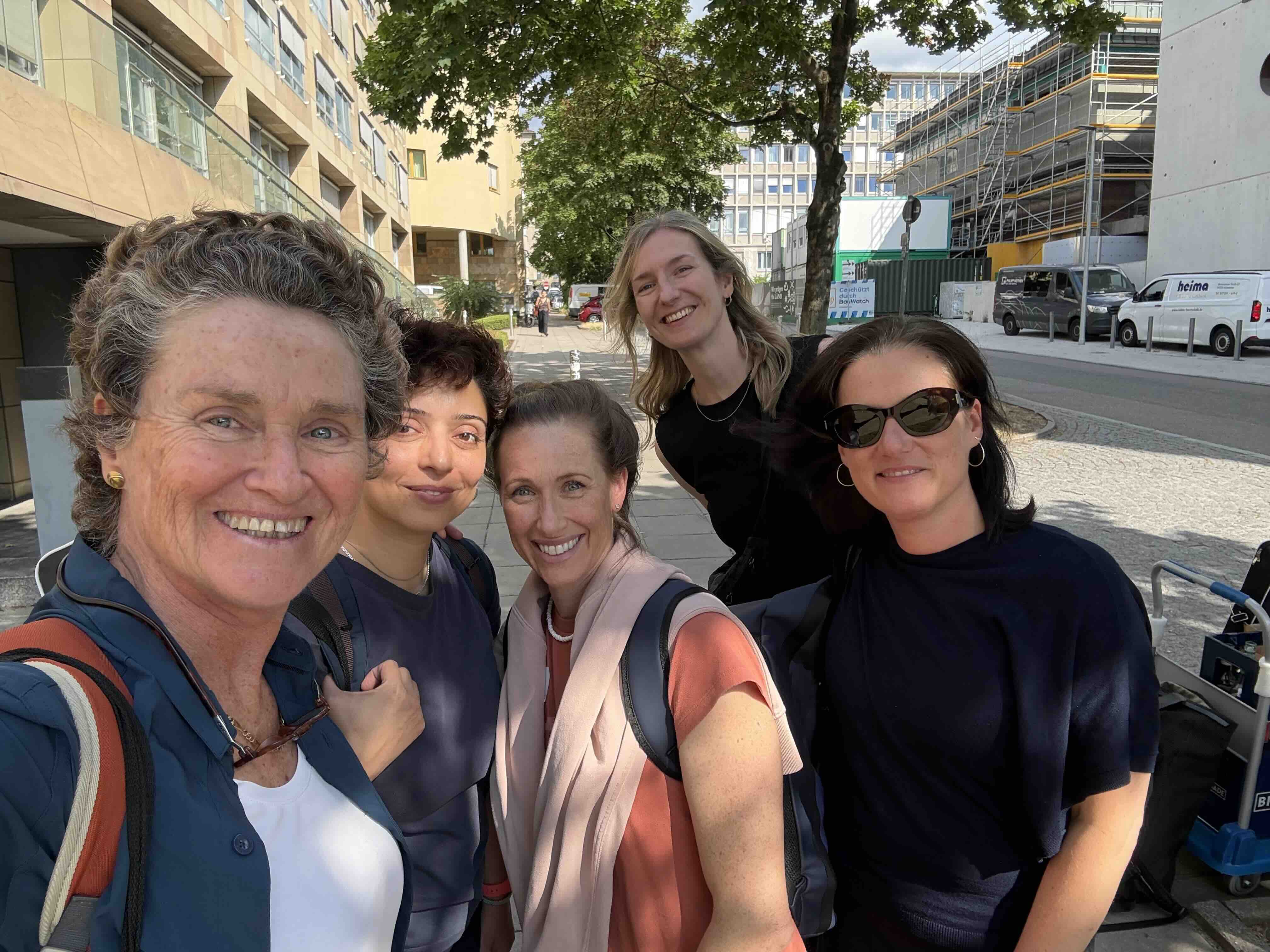
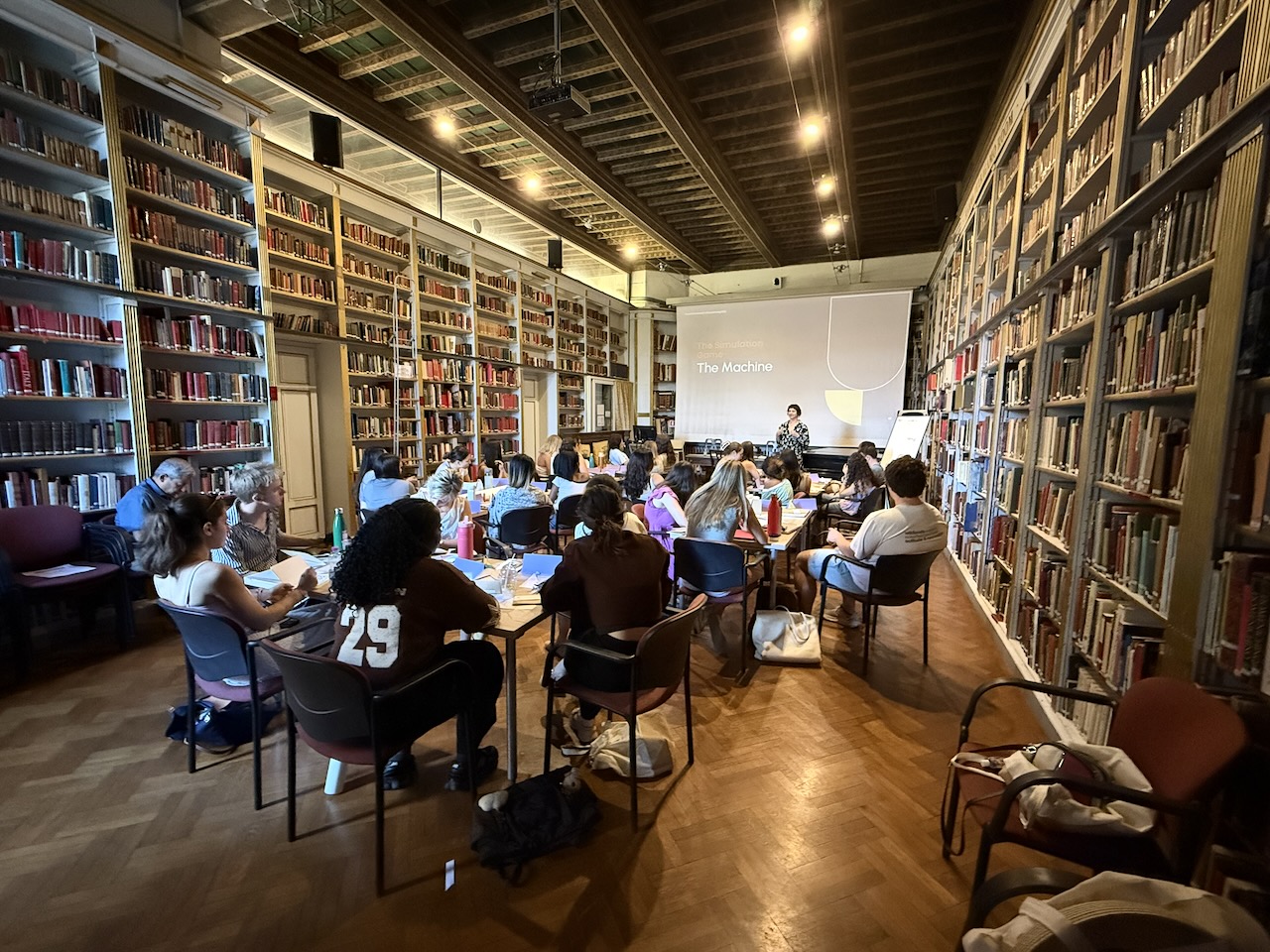
Following our Brave Conversations in Braunschweig Professor Noshir Contractor, CEO of the Web Science Trust, and Professor of Behavioral Sciences, McCormick School of Engineering and Professor of Management & Organizations at Kellog Northwestern University, invited us to participate in his Leadership Summer Programme in Florence.
How could we refuse!
Hosted at the British Institute in Florence we were thrilled to work with Nosh and his partner Northwestern Professor and Program Director Leslie DeChurch in the most beautiful environment of the Harold Acton Library.
Nosh opened the event by making the link between what we do with Brave Conversations and the Italian Renaissance - bringing the sciences and arts together in a creative space in order to explore and discover.
Within the context of the Polycene this seemed to me a perfect way to bring the past and present together:
History teaches that every crisis feels unprecedented until you read about the previous one. Philosophy gives you frameworks for decisions before emotions cloud them. Biology teaches you that most human behavior that seems irrational makes perfect sense as a survival mechanism. Physics teaches you about systems, leverage, and compounding. (Thomas Oppong 2026)
Hannah and I decided that this Brave Conversations we would refine the Simulation Game for the venue and the context. The main challenge we had was to fit our session seamlessly into the entire programme but this was made very easy as Noshir did a presentation on LinkedIn immediately before we began. The perfect segue!
Once we began it was clear that we had an energetic, engaged and enthusiastic group of young (mostly female) people who were prepared to challenge and push boundaries. The Simulation Game brought out their spirit of competition - at one stage Leslie was boxed in to the back of the Library! - but it also repeated many of the same patterns we have observed elsewhere:
· Participants followed their AI Agent with minimal efforts to challenge or over-ride
· The AI Agents' instructions were often ignored or at least not fully enacted
· The physical constraints of the space always make the game different - this time we had a 300 year old library and very precious books
· The energy levels of the Game change. With Stuttgart they built up to high energy; in Florence they peaked very early
The reflection we had at the end of the session showed that there is a fairly consistent interaction between the humans and the machines, and all too often the machines get in the way of the human dynamics. Both the Stuttgart and Florence groups felt that they could have achieved their goals much more quickly if they'd just focused on human-human negotiations, but no group ever does this ... they always follow the machine.
There is a rich amount of data now emerging in these games which we would like to harness ... a challenge for our next iteration.
In the meantime a huge thanks to Noshir Contractor and Leslie DeChurch for having us.
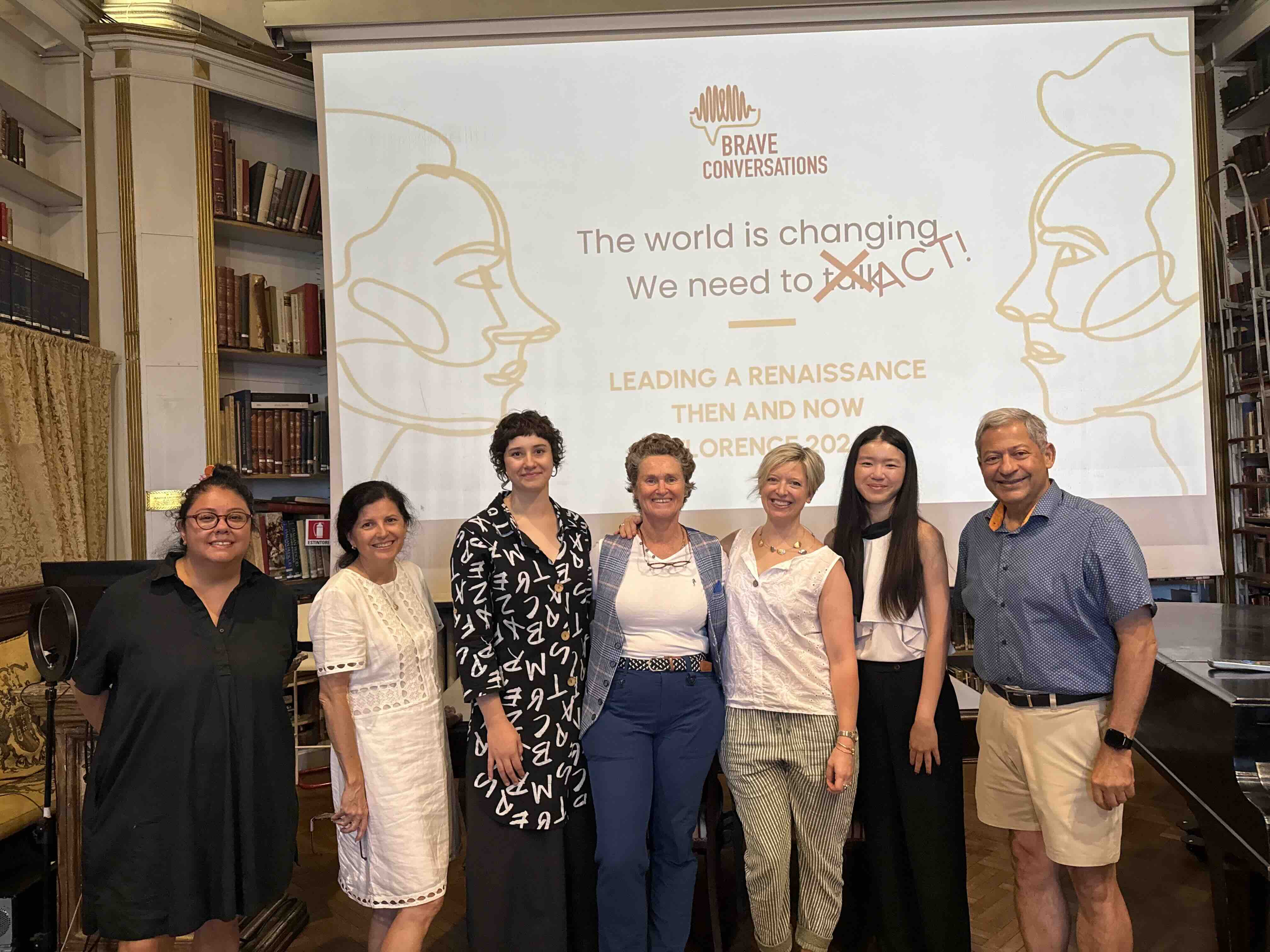
We now have a fairly solid team of people who have experienced Brave Conversations and are adding to how it is run and plays out. This is wonderful and my own thanks to Hannah Stewart, Ghada Ibrahim and Lisa Kohler for their continued enthusiasm and appetite to be brave.

Creative Commons CC BY-NC-SA: This license allows reusers to distribute, remix, adapt, and build upon the material in any medium or format for noncommercial purposes only, and only so long as attribution is given to the creator. If you remix, adapt, or build upon the material, you must license the modified material under identical terms.
CC BY-NC-SA includes the following elements:
BY

– Credit must be given to the creator
NC

– Only noncommercial uses of the work are permitted
SA

- Adaptations must be shared under the same terms

