
The Old People told me that we keep Country company. We sing to it, we dance, we look after it. And in any other form past this life, you will not have the same privilege to look after Country in the same way (Nyikina Warrwa and Wangkumara Barkindji woman Marlikka Perdrisat).
Out of the crooked timber of humanity, no straight thing was ever made (Immanuel Kant).
We are all visitors to this time, this place. We are just passing through. Our purpose here is to observe, to learn, to grow, to love and then we return home (Australian Aboriginal saying)
Australia is home to many countries as illustrated by this image I took in Darwin which reflects the AIATSIS map.
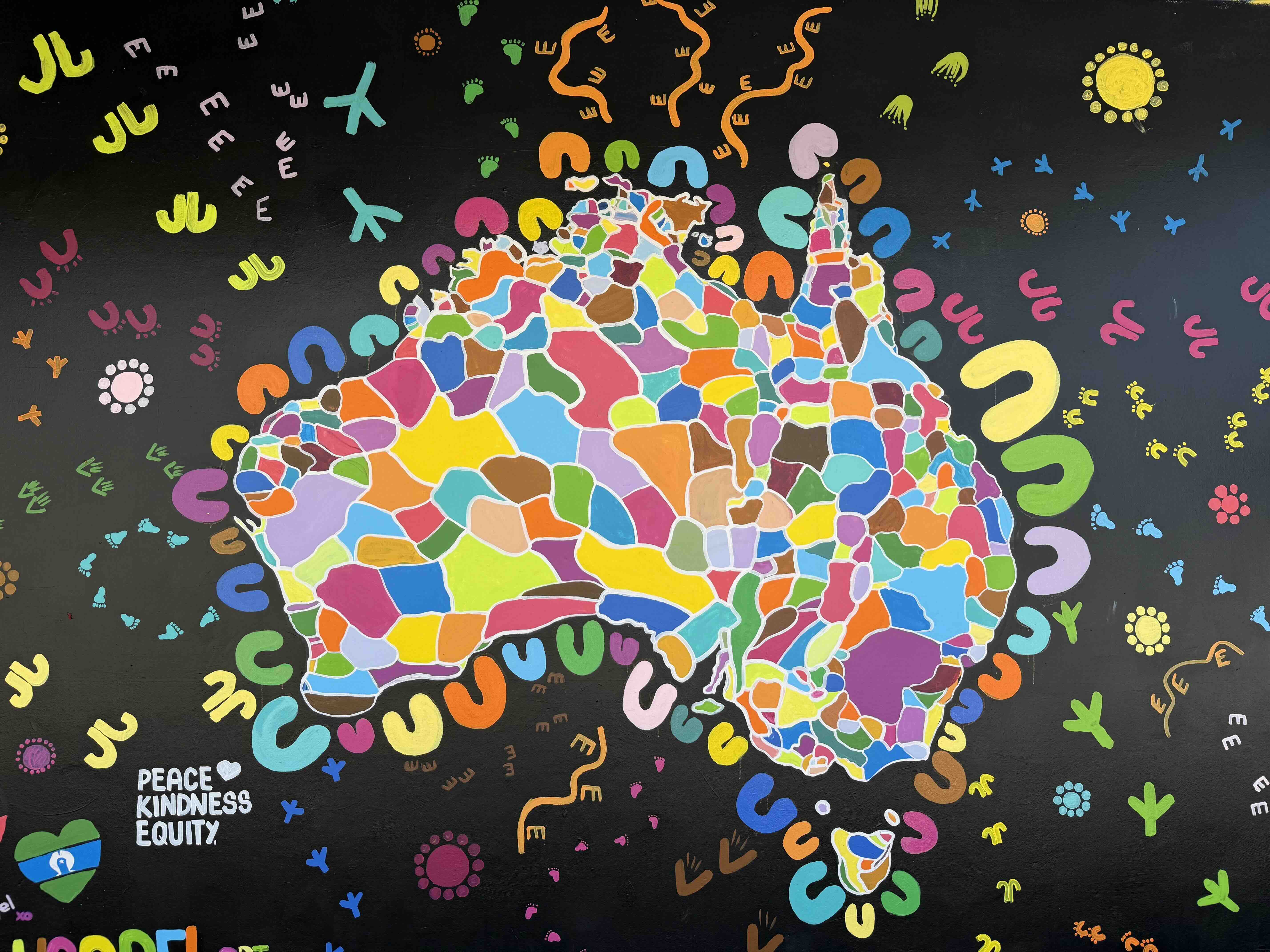
All too often we lump these peoples and nations together which is evidence of both ignorance and a very WEIRD arrogance. These many and varied people with different languages and protocols, and different relationships with each other, have peopled the oldest continent on Earth for longer than anyone anywhere.
The Colonial story of Australia is one that has long fascinated me, mainly because it has been so focused on the European triumphant exploitation of resources with little real attention paid to the colonisation process as a military contest for resources.
Writer Henry Reynolds in Forgotten War and Aboriginal film Director Rachel Perkins in The Australian Wars show that the Aboriginal people did not passively allow the Europeans to mow them down and take their land, they fought back often to the point of endangering the viability of White settlement.
(T)his is not just an Indigenous story to tell... Because in any war there are different sides. So even though I’m an Aboriginal person, I didn’t just want to tell the Aboriginal side. Non-Indigenous Australians are bound up in this as well, we all live in this country together. (Rachel Perkins, Arrernte and Kalkadoon)
My own fascination comes with many layers and emotions as I myself am ‘born of the conquerors’ and part of what journalist and author George Megalogenis has described as the ‘trunk’ of the Australian family tree.
Seeing Australia as a Family Tree based upon generational time on country – our indigenous people are the roots, the trunk is those with both parents born in Australia, the branches are first and second generation, new Australians. (George Megalogenis, The Three Shocks that changed Australia).
Megalogenis was inspired by the description of Australia by Aboriginal leader Noel Pearson:
Our nation is in three parts. There is our ancient heritage, written in the continent and the original culture painted on its land and seascapes. There is our British inheritance, the structures of government and society transported from the United Kingdom fixing its foundations in the ancient soil. There is our multicultural achievement: a triumph of immigration that brought together the gifts of peoples and cultures from all over the globe — forming one indissoluble commonwealth (Noel Pearson).
A Commonwealth is a political community founded for the common good, a state in which the supreme power is vested in the people.
I grew up hearing stories of my forebears such as George Wyndham who emigrated to Australia and founded Dalwood, the longest running commercial vineyard in Australia.
Our family has been described as a pioneering Dynasty who, like most pioneering families, saw the country as a resource to be exploited, tamed and harvested, and, like many Australian families, ours grew prosperous and wealthy because of this.
Some, such as my cousin, poet Judith Wright have struggled with this family legacy writing of it in her books “The Generations of Men”, “The Cry for the Dead” and “Born of the Conquerors” where she states that:
(It is) a legal fiction that Australia was peacefully settled, not taken by acts of war.
Judith describes the changes to the Australian landscape as a consequence of the cessation of Aboriginal hunting and the introduction of European agricultural practices.
Traditional Aboriginal attitudes to land are not very different to those of the most enlightened conservationists. But they are based on a far deeper and far older association with it than any we can claim.
It is not just the physical environment that has changed.
Professor David Tacey talks about the psychic connection that aboriginal people have with the land and contrasts this with ecological emergency that is emerging worldwide.
There's an increasing concern about Aboriginal reconciliation, and also there's an increasing concern about the environment. And those two really are hand in glove in Australia, because the most environmentally aware and conscious people on this continent, of course, are Aboriginal people.
For many young people who are concerned about their futures on many levels learning more about and beginning to understand this psychic connection to land may be something which can give hope.
Modernity has been a failed human experiment. It's people, the idea that we can live without God and can live without a metaphysical belief system, can live without spiritual and ethical guidelines, which involves a sense of the other, that which is greater than ourselves. (David Tacey).
Australian poet Les Murray talks about a sense of the presence of the sacred out in the bush and it is perhaps the work of Carl Jung which may help those of us from the WEIRD Whitefella world to begin to make sense of where humanity is as it navigates the Polycene.
These key themes – the fragility, diversity and resilience of both the Australian people and the Australian landscape, and the desperate need for healing – were what emerged from me after my time in the Outback.
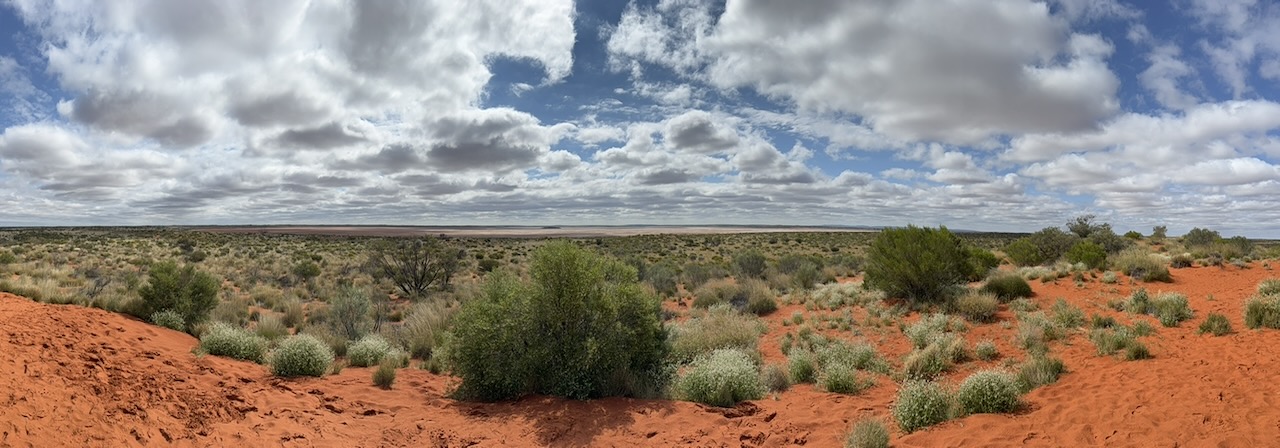
What I learned and experienced is that to understand Australia you need to understand country.
We don't own country, country owns us.
Garma is Australia’s largest Indigenous gathering held over four days at the Gulkula ceremonial site just south of Nhulunbuyon the Gove Peninsula in East Arnhem Land.
Getting to Garma is a challenge in itself. It took us almost 8 hours flying from Darwin including a 5 hour flight delay due to a broken aeroplane courtesy of Air North (we also had a 5 hour flight delay due to another broken aeroplane on the way back - something which apparently happens quite often). For those who drive the 8 hours from Darwin the general advice is not to swim at the river crossings.
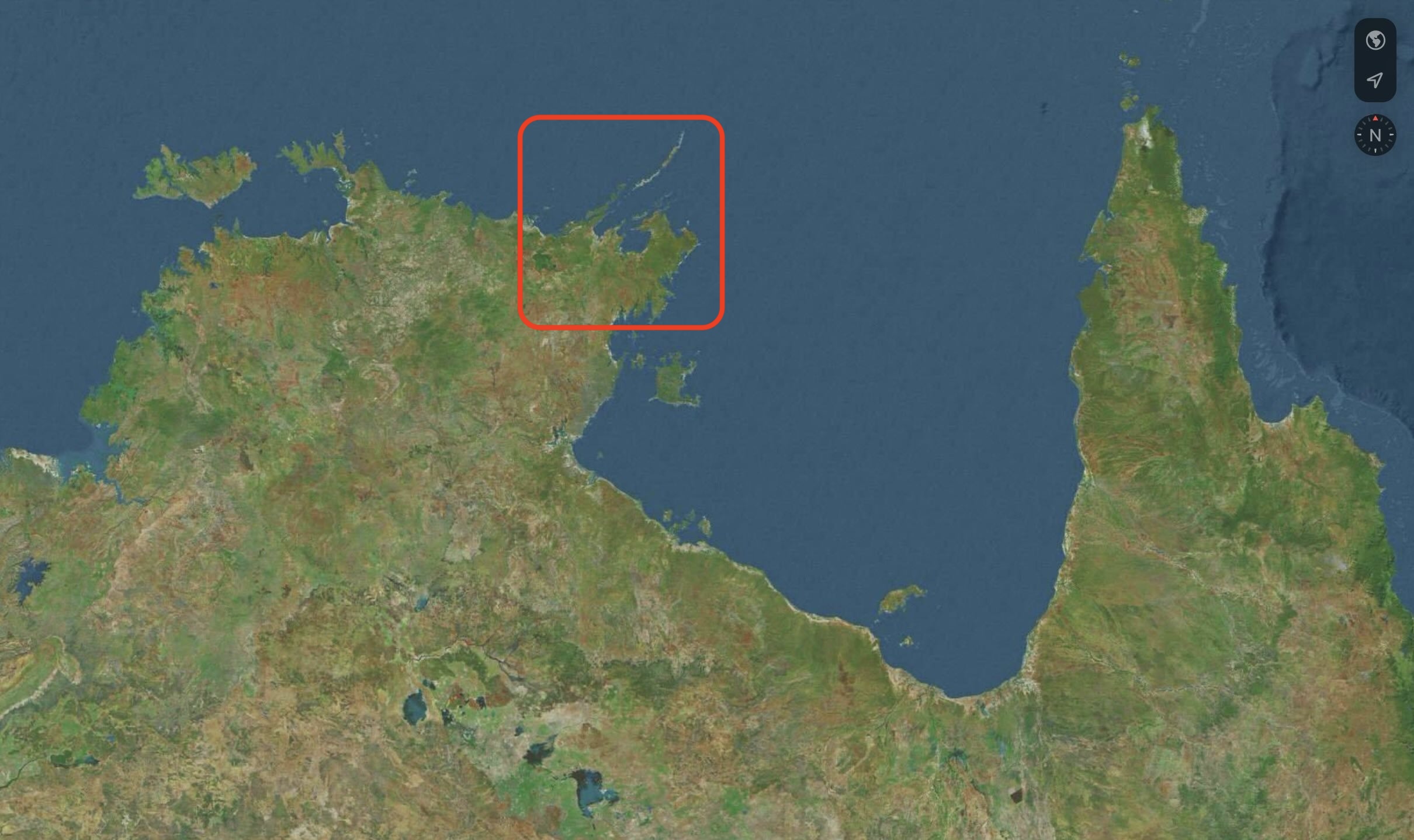
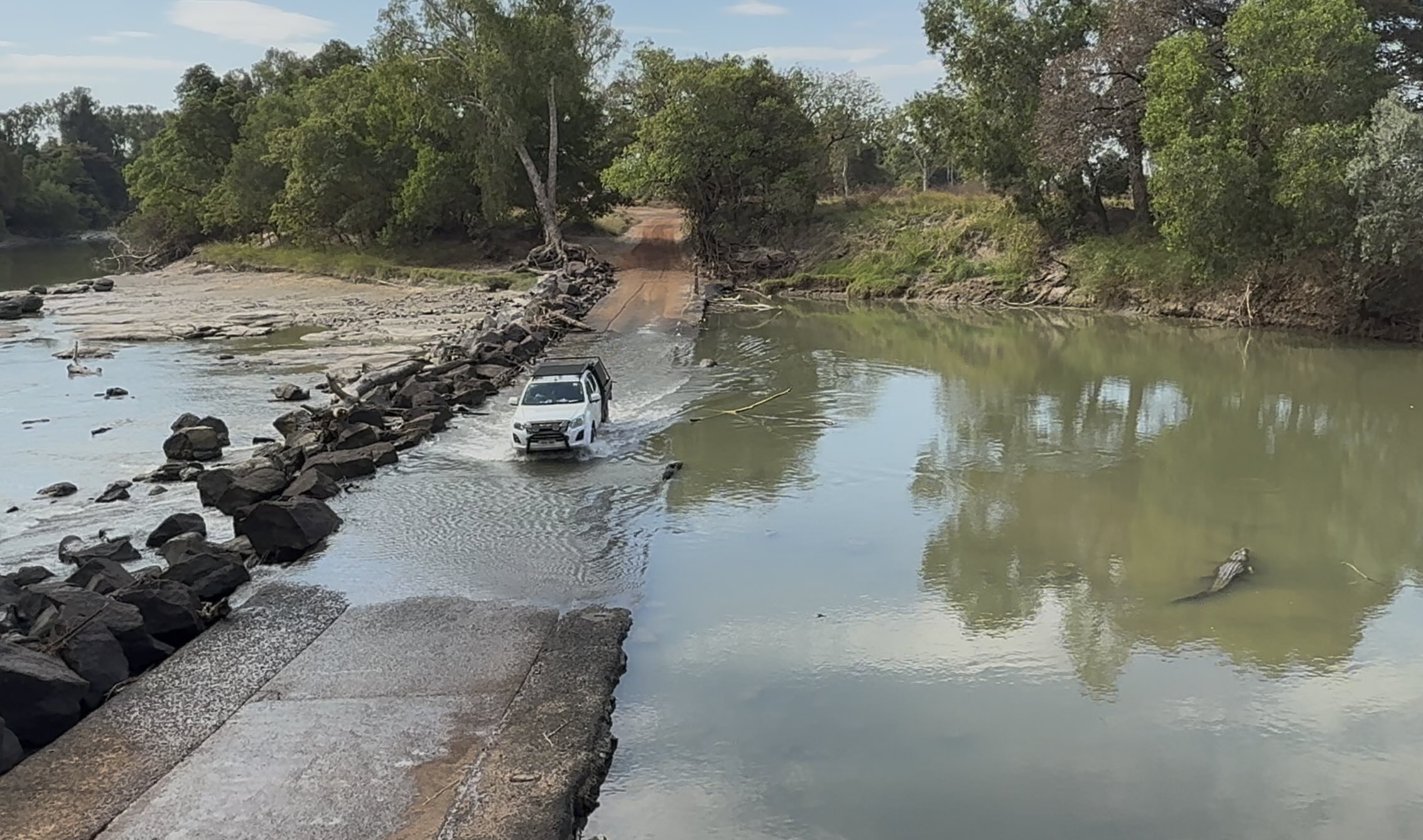
Despite the information on the Garma website, and the recommendations of numerous people, we really had no idea what to expect at Garma. The most obvious advice is that to even begin to make sense of Garma you need to look deeply at the history and culture of the Yolŋu and Yanyuwa people. These nations have been trading with others across the Australian continent and throughout the Pacific and South East Asia for millennia, exchanging products, culture, stories and rituals. Their contact is documented through rock art and bark paintings and it is crucial to realise that despite the myth that the early Europeans discovered and found an isolated island continent its first inhabitants had been connecting it for aeons.
As Australian Foreign Minister Penny Wong stated in her Garma speech the name for the 2026 Festival, ‘Bukmak’,
represents the togetherness, the shared responsibility, the inclusive outlook, and the collective purpose … a commitment to reflect the unity and diversity of modern Australia. … (F)oreign policy starts with who we are. It is how we project ourselves to the world.
We are not a monoculture and never have been.
These ancient practices, albeit thousands of years old, represent Australia’s way forward in our region (Penny Wong, Australian Minister for Foreign Affairs).
Garma is the flagship of the Yothu Yindi Foundation, formed in 1990 to promote Yolŋu cultural development with community leaders and persons of authority from thirteen regional clan groups. Two of the key founding figures were Dr. Mandawuy Yunupiŋu, lead singer of the band Yothu Yindi, and his older brother Dr. Galarrwuy Yunupiŋu, a prominent land rights leader.
The Yothu Yindi band became an Australian phenomenon with it’s song Treaty, the first song by a predominantly Aboriginal band to chart in Australia and the first combining English with an Australian Aboriginal language to gain extensive international recognition.
Australia remains the only major former British colony that has never signed a Treaty with its First Nations peoples and for over two centuries we have been struggling to truly honour the word Commonwealth when it comes to our indigenous peoples.
In 1832 Tasmania Governor George Arthur raised the lack of Treaty as a ‘fatal error’ and since then attempts at some sort of recognition and reconciliation have been made through the 1938 Day of Mourning, the 1963 Yirrkala Bark Petitions, the 1967 referendum (which thankfully yielded a Yes result), the 1972 Aboriginal Tent Embassy, and then the Treaty movement proper which began in 1979 led by non-indigenous people like economist H.C. "Nugget" Coombs and poet Judith Wright.
In 1988 the Barunga Statement calling for a treaty recognising Aboriginal rights and self-determination was presented to Prime Minister Bob Hawke who then attended the Barung Festival in 1990.
(T)his is where he made a statement that there shall be a treaty between black and white Australia. … I said, "Well, I heard it on the radio. And I saw it on the television." That should be a catchphrase. And that's where 'Treaty' was born (Mandawuy Yunupingu, 8 July 2004).
In 1992 High Court Mabo decision overturned the legal fiction of terra nullius and shifted the focus from Treaty towards recognition of Native Title.
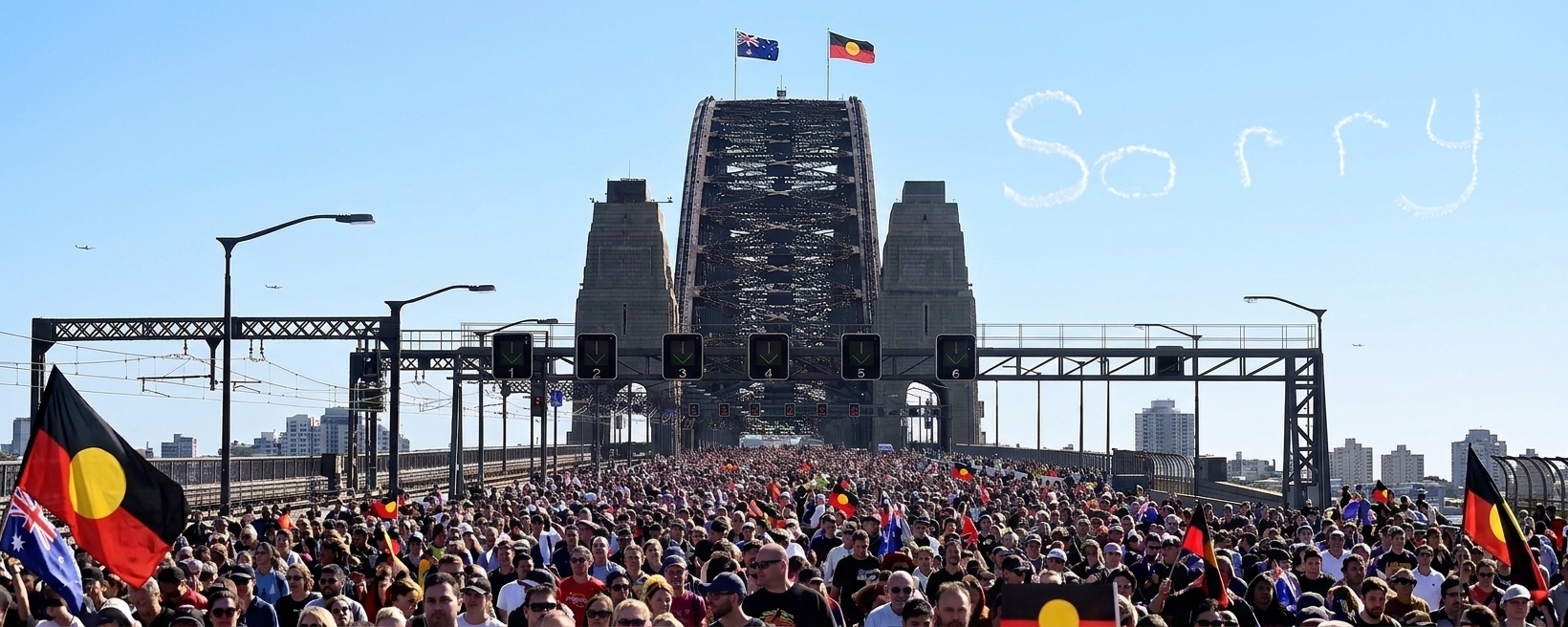
On 28th May, 2000 I walked with my family and around 250,000 people over the Sydney Harbour Bridge to say "Sorry".
In 2005 Professor Tom Calma’ delivered his 2005 Social Justice Report to the Human Rights Commission challenging Australian governments to bring parity to the health and living standards between indigenous and non-indigenous Australians within a generation. This led to the Closing the Gap initiative.
In 2008 Australian Prime Minister Kevin Rudd delivered his Apology to Aboriginal and Torres Strait Islander people both acknowledging past injustices and committing to building:
A future where we harness the determination of all Australians, Indigenous and non-Indigenous, to close the gap that lies between us in life expectancy, educational achievement, and economic opportunity … A future based on mutual respect, mutual resolve and mutual responsibility (Kevin Rudd, 2008).
In 2017 came the Uluru Statement from the Heart proposing a three-part sequence of reforms — Voice, Treaty, and Truth - and then the failed Voice Referendum in2023. The Federal government is now leaving Treaty to the States.
This is more than a Wicked Problem, it is a deep and still festering wound that needs care, attention and healing, not just for the ‘pale blue dots’ that Noel Pearson describes at Garma but for the nation as a whole.
If the roots of a tree are stressed, malnourished and in crisis, then the rest of the tree, despite how healthy it might appear, is also in crisis and in need of healing.
Thankfully, this is beginning to happen literally from the ground up.
Indigenous Australians are now being encouraged to explore their cultural roots through language (AIATSIS) which increasing numbers of people are doing. Programmes such as Core are being developed to help non-indigenous Australians develop a greater cultural awareness. All of this can only contribute to the healing process.
Language is a key defining characteristic of humans, and how we describe things is extremely important. Which brings me back to the words 'colonisation' and 'conquest'.
At Garma the Australian Army had a strong presence mainly due to the history and presence of NORFORCE, Australia’s ‘eyes and ears in the North’. The Nackaroos were formed in 1942 as part of the defence of northern Australia during the Second World War (see the Mirinu Project. Captain Tom Campbell told us this story - of which most Australians are ignorant - and NORFORCE continues to provide valuable protection for our northern shores, despite what some may believe – one look at how the Iranians have kept the most powerful military at bay in the Straits of Hormuz shows the value of initiatives like this.
Tom’s storytelling reinforced the fact that my own understanding of the history of the north is woefully inadequate, let alone the appreciation of the contributions of Aboriginal and Torres Strait Islanders to Australian Military service over the past two centuries. Even in the Darwin Military Museum where NORFORCE should be acknowledge with pride there is an almost hidden exhibit in a bunker which most visitors would ignore.
Much of what I experienced at Garma came not from the evening Bunggal, cultural workshops, cinema, fireside chats, poetry readings, astronomy tours and women’s healing sessions or from the Policy Forum and Youth Forum for students from across Australia. I learned the most in the interstice - chatting with people whilst queueing for meals, sharing a dining table, sitting to charge my phone at the undermanned Telstra van, chatting at the Gallery opening, talking to volunteers and chatting with wonderful people like the staff of Orange Sky.
It came from listening to people on country.
Please walk softly on Mother Earth and treat her with love and respect as the Larrakia people do. (Aunty Bilawara Lee, Welcome to Country, Darwin Festival 2026).
Aunty B’s Darwin Festival Welcome is probably the most dignified, gentle, authentic and truly welcoming I have ever heard. I first heard it last year and both times I have felt a genuine and very proud welcome to all visitors to Larrakia country.
This year’s Darwin Festival was rich with cultural experiences but two stood out, particularly as I explored the themes of fragility, resilience and healing.
The Northern Centre for Contemporary Art in Parap had a most disturbing exhibition entitled IncarcerNation which graphically documented the lives of mainly young indigenous people in prison.
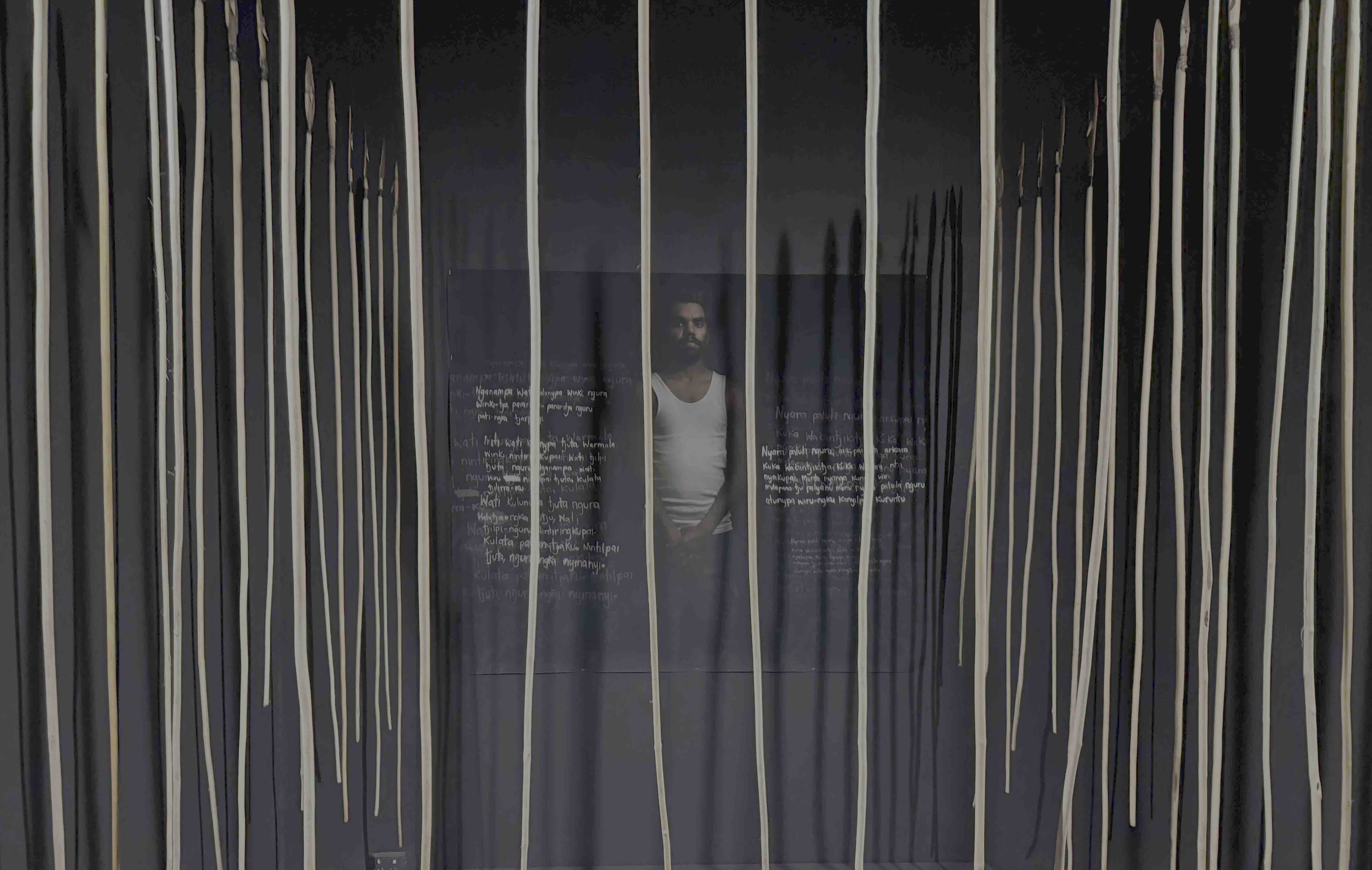
I found this exhibition deeply disturbing, mainly due to the sheer waste of young Aboriginal peoples' lives as they are disconnected from country, from family and from language. Not only are we as a nation spending huge amounts of public funds to incarcerate them, but we are ignoring the value that they may be able to offer as human beings.
A corollary to this was the Behind the Wire exhibition hosted at the Fannie Bay Goal which featured paintings and sculptures by artists (only men sadly) from correctional centres across the Territory.
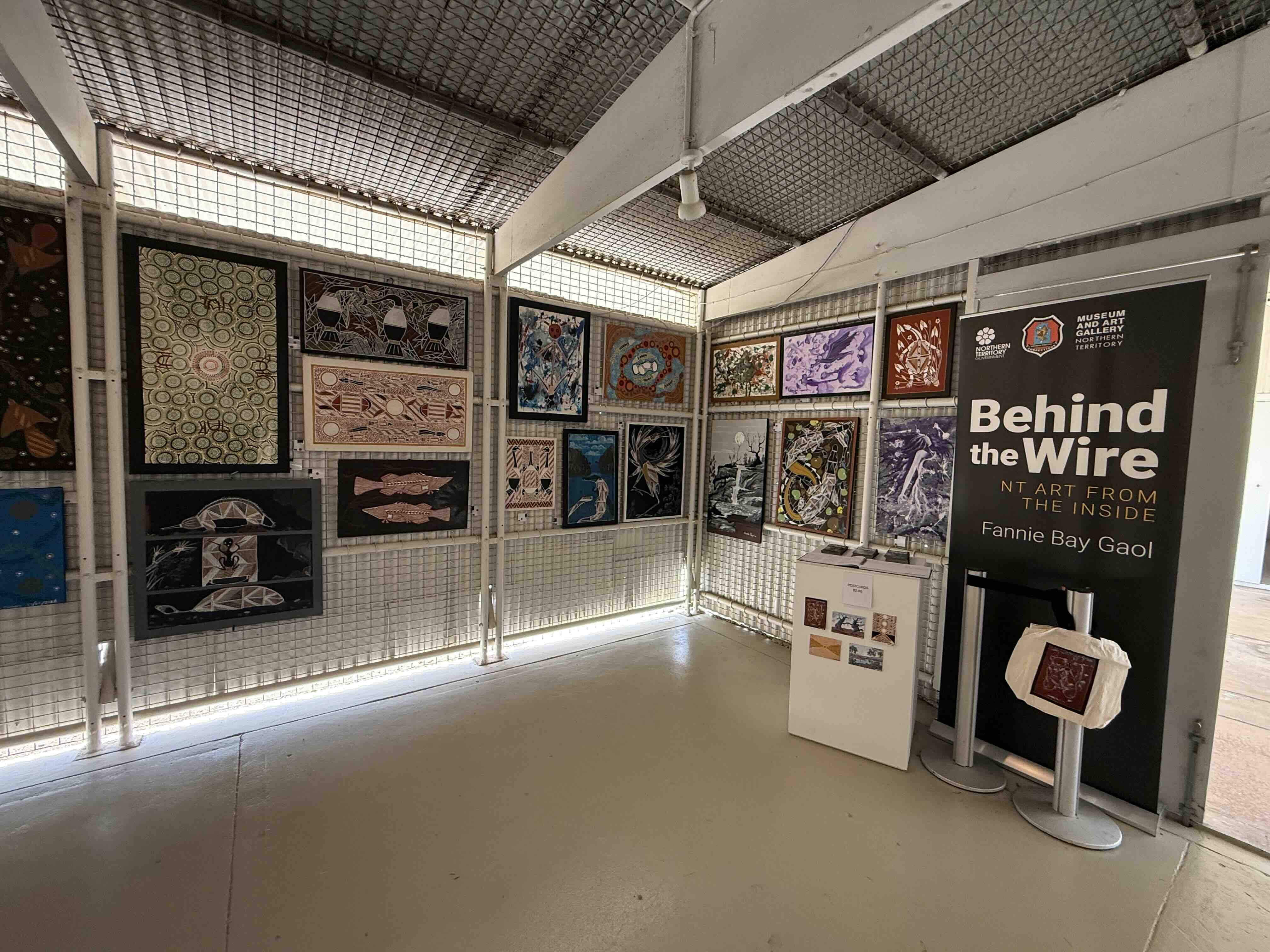
For me this exhibition presented hope, even though these people were also incarcerated but they were able to express themselves and their deep connection to land and country.
In her book 'Cry for the Dead' Judith describes the European arrogance of the first settlers who came out to Australia and saw the indigenous people as the miserablest people in the world', impoverished hunter-gatherers on barren, disconnected land (William Dampier).
Many sought to stay briefly, make their fortunes and then return to England:
We strew the earth with murder, crime and woe …
We pave our path with terror, blood and tears … (William Forster, Premier of NSW, The Brothers)
Few appreciated the fact that these people have survived for thousands of years in the most inhospitable environments on earth.
Of all the places to visit in Australia the World Heritage listed Uluru is usually near the top.
In 2019 the traditional owners, the Aṉangu people, closed the Rock to climbing.
Tjukurpa includes everything: the trees; grasses; landforms; hills; rocks and all... It is an extremely important place, not a playground or theme park like Disneyland. ... If the Tjukurpa is gone so is everything (Sammy Wilson, Chair of the board of management of Uluru Kata Tjuta National Park).
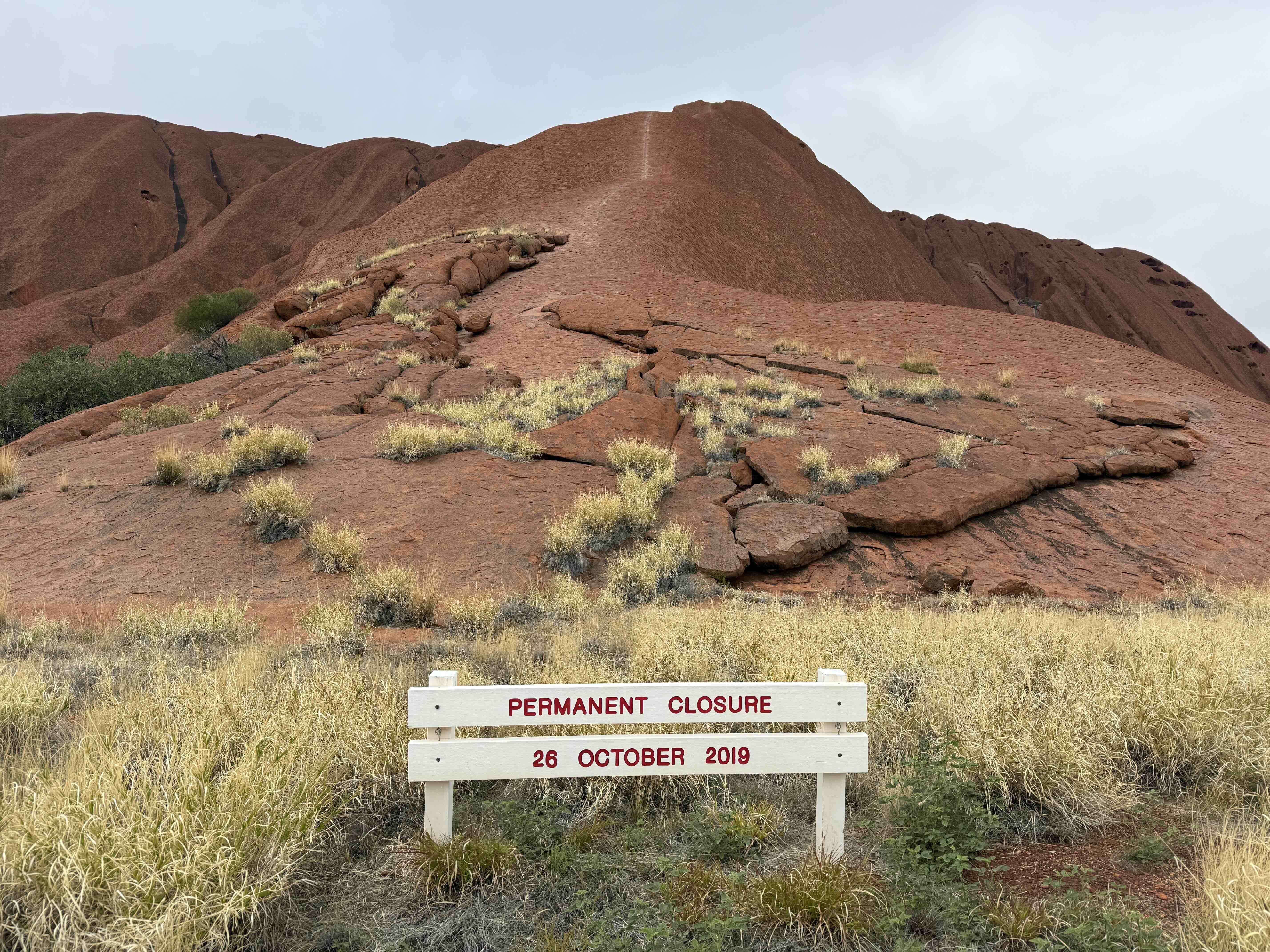
Uluru Kata Tjuta National Park is owned and operated by Yankunytjatjara and Pitjantjatjara people and whilst we walked around the Rock we couldn't climb it. The story of this sacred monolith is an example of how a growing respect for Aboriginal culture is actually manifesting and how a collaboration where we can integrate Blackfella wisdom and Whitefella commercialism might actually work. There's a long way to go but there is hope.
Hope is not the word I would use to describe Mparntwe (Alice Springs).
The impression I got is that most people travel to Uluru by flying in to Yalara, the purpose built tourist village, rather than travel via Alice. The five hour drive is actually wonderful as the landscape passes by and the sheer isolation of this part of the world can be appreciated.
Alice is different. It sits at the geographic centre of Australia and was founded in 1871 as a repeater station for the Australian Overland Telegraph Line and has evolved to be the major shipping point for cattle and minerals, a resupply point for the surrounding pastoral and remote Aboriginal communities, a stop off on the Stuart Highway and the train line.
Alice should be the beating heart of Australia with much going for it. Instead, Alice seems to always be in the news and not in a good way. People told us 'not to bother' going to Alice, 'there's crime in Alice' and the most recent killing of Kumanjayi Little Baby again put it front and centre. But little Kumanjayi doesn't represent crime, she represents the deep deep sadness of Alice, as if Alice is holding all of it for the whole country in its heart.
Alice as perhaps the saddest of Noel Pearson's saddest pale blue dots.
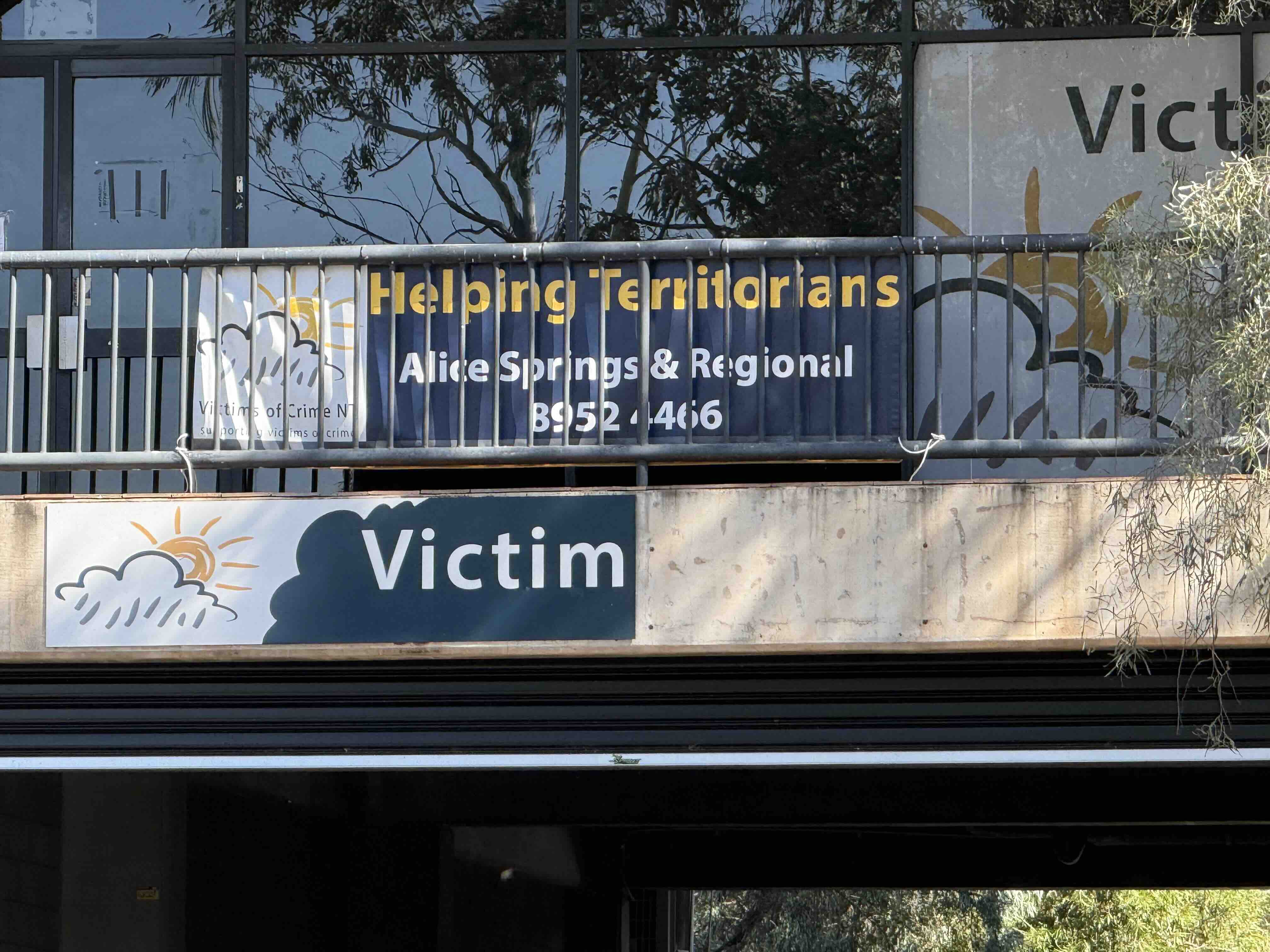
Coming back to Sydney felt like I'd come back to a completely different country. The land of the Whitefella with all its traffic and noise and speed.
But the contrast has enabled me to reflect on my experience and at the core my feeling is that we are stuck here in Australia. We don't seem to be able to move forward, we can't go back, and what we are dealing with is way more complicated that a simple Treaty, March or Native Title court ruling.
The complexity of what faces us is as challenging as trying to definitively determine a map of Australia and it is going to take time and patience over generations to progress.
What gives me hope is that the Aṉangu, Arrente, Larrakia, Yolŋu and Yanyuwa people are just some of around 600 nations in Australia speaking some 250 different languages with their own cultures and protocols. Referring to Aboriginal and Torres Strait Islander people as one group is like talking about all Europeans, all Asians or all Africans in a similar vein. It is both ignorant and naïve.
In the 2021 Australian Census the Aboriginal and Torres StraitIs lander population (counted as one from a Western point of view) was estimated to be 983,700 people with a projection to reach between 1,171,700 and1,193,600 people by 2031. There has been a rapid increase in the number of people identifying this way perhaps due to a growing pride, curiosity and acceptance of their heritage but perhaps it also reflects a gradual maturing of the Australian mindset as a whole demonstrated through the now prevalence of Acknowledging Country and the gradual renaming of places.
This means that the Aboriginal and Torres Strait Islander voice is getting louder and will become not just a socio-ecological but increasingly political one.
My feeling about The Voice, in which I am proud to state I voted "Yes", is that if you present people with a binary choice – a‘ Yes’ or ‘No’ - without any preparation for, or accommodation of, the ‘I don’t know’ or ‘maybe’, then you will end up with a negative result. Australia is still in its adolescent phase for these conversations, we are still only beginning to figure out what they actually mean, and thus we were ill-prepared to make a choice of this magnitude.
Which is sad and unfortunate because I know it has had a negative impact on many Aboriginal people ever since, some of which I heard about particularly in Alice.
This, like the framing of our colonial history as simply an invasion rather than a territorial resource war, fails to recognise and accommodate the ways in which we are as diverse as the people and communities who make up modern Australia.
Perhaps a way forward might be for us to reframe some of our conversations such as:
describing Australian Colonial settlement as it really was, a conflict over resources where there were Conquerors and Conquered/Victors and Vanquished and then being able to acknowledge and give dignity to both sides
recognising the diversity in history, culture and society within the Aboriginal and Torres Strait Islanders themselves
acknowledging and marvelling at the resilience of indigenous communities and valuing their wisdom
appreciating that our 21st Century wealth comes from reaping the resources of Country, both people and place. This wealth presents the obligation to pay it forward.
committing to work together - all three parts of our family tree - without defaulting to blame or victimisation.
Noel Pearson stated it plainly at Garma:
The blue-dot communities of our homelands stand in grave need of healing.
I have come back from my Time on Country with a far greater appreciation of the fragility, diversity and resilience of both the Australian people and Australia as Country.
I am now firmly convinced that the whole of Australia is in grave need of healing. We won't truly progress until we take the time, focus our energies and garner the resources to do so.
In this there is hope.

Creative Commons CC BY-NC-SA: This license allows reusers to distribute, remix, adapt, and build upon the material in any medium or format for noncommercial purposes only, and only so long as attribution is given to the creator. If you remix, adapt, or build upon the material, you must license the modified material under identical terms.
CC BY-NC-SA includes the following elements:
BY

– Credit must be given to the creator
NC

– Only noncommercial uses of the work are permitted
SA

- Adaptations must be shared under the same terms

